ARCH 402 - STUDIO NUNEZ CIUFFA, MELLINI, & MINCIACCHI - HOUSE OF RIGHTS IN ROMA
Group Members: Ava Eisenbarth, Lindsay Hoag, & Rachel Koster
2026 Paul Mankins Rome Studio Prize 1st Runner Up
STUDIO BRIEF
The House of Rights is a project of memory, resistance and hope. The goal is to investigate the capacity of contemporary design to intervene in a complex historical urban site (memory), using social inclusion and collective resources (resistance) to build in the heart of city center, new public spaces, new possibilities of common life, and a renovated civic participation (hope). The course will develop the project of a civic pole, a public building with annexed outdoor spaces and green areas, dedicated to the specific needs of one group social actors that are nowadays vulnerable categories: migrants (regardless of their legal status), women victims of abuse (abuse might be physical, psychological, emotional, economical etc.), or the LGBTQIA+ community.
The House of Rights is a project of memory, resistance and hope. The goal is to investigate the capacity of contemporary design to intervene in a complex historical urban site (memory), using social inclusion and collective resources (resistance) to build in the heart of city center, new public spaces, new possibilities of common life, and a renovated civic participation (hope). The course will develop the project of a civic pole, a public building with annexed outdoor spaces and green areas, dedicated to the specific needs of one group social actors that are nowadays vulnerable categories: migrants (regardless of their legal status), women victims of abuse (abuse might be physical, psychological, emotional, economical etc.), or the LGBTQIA+ community.
In a complex historical urban site (memory), the project aims to use social inclusion and collective resources (resistance) to shape new possibilities of common life and civic participation (hope). The site is located in the historic city center of Roma, in front of the Basilica di Massenzio, with an irregular triangular perimeter marked by Via dei Fori Imperiali to the South, Via del Colosseo to the North
and Via del Tempio della Pace to the West. The site itself is partially occupied by Palazzo Silvestri Rivaldi, a building complex from the Renaissance period, currently abandoned. Students are called to design a space where local independent civic society organizations can work to protect and to advance human rights, in response to the wholly inadequate infrastructural support guaranteed by the Institutions to the more vulnerable social actors. The course will assign a generic functional program, that has to be fulfilled in its broad spectrum and generic intent, but that has to be tailored and implemented depending on which category students choose to work with.
and Via del Tempio della Pace to the West. The site itself is partially occupied by Palazzo Silvestri Rivaldi, a building complex from the Renaissance period, currently abandoned. Students are called to design a space where local independent civic society organizations can work to protect and to advance human rights, in response to the wholly inadequate infrastructural support guaranteed by the Institutions to the more vulnerable social actors. The course will assign a generic functional program, that has to be fulfilled in its broad spectrum and generic intent, but that has to be tailored and implemented depending on which category students choose to work with.
PROJECT NARRATIVE
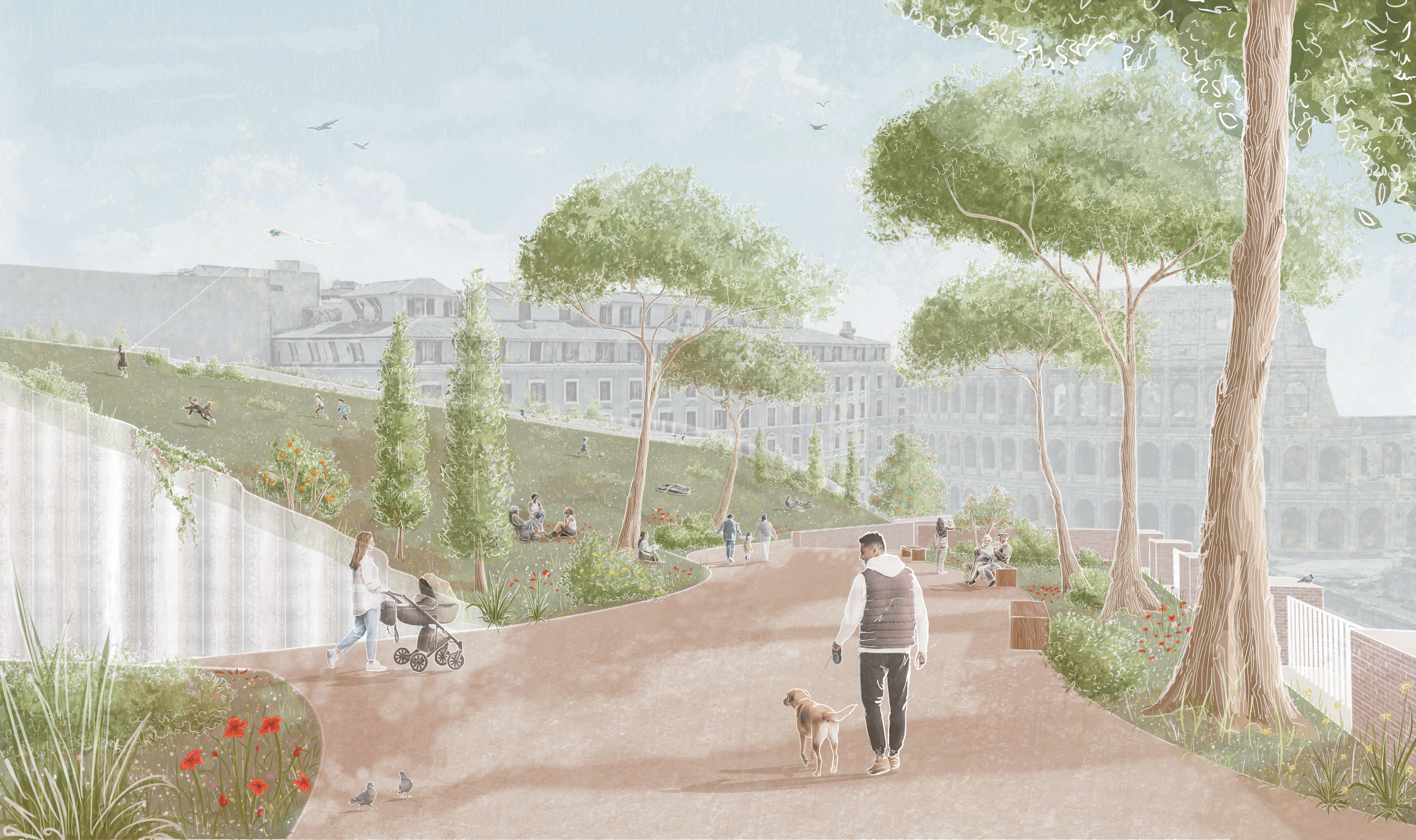
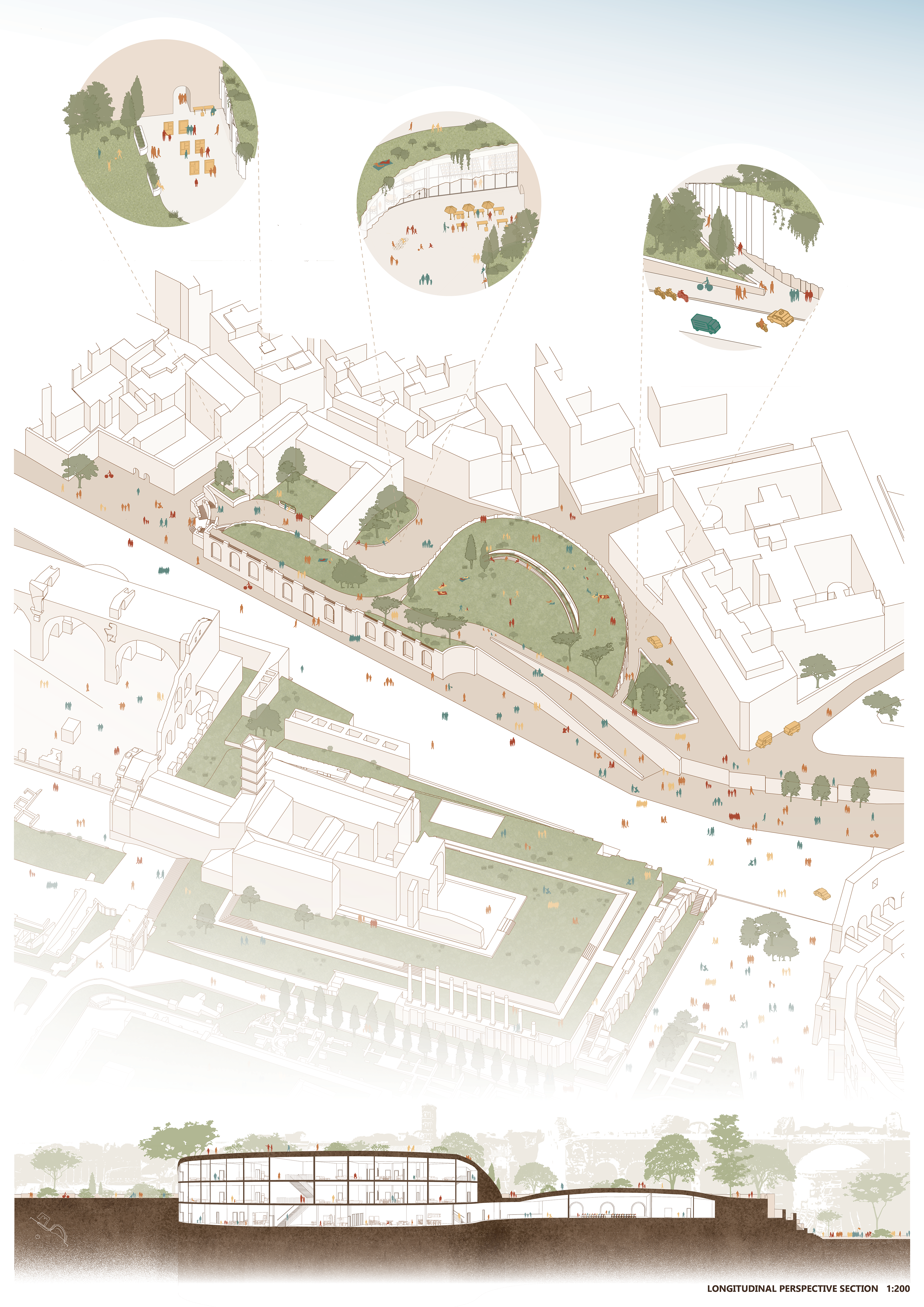
“Collina Viva” proposes a new model of urban housing in the city of Roma where domestic life and public space are interwoven. The project is developed for a community of women at the intersection of career, independence, and motherhood, offering a space of collective support and belonging. Overall, “Collina Viva” aims to bridge private and communal life in the historic urban fabric.
“Collina Viva” proposes a new model of urban housing in the city of Roma where domestic life and public space are interwoven. The project is developed for a community of women at the intersection of career, independence, and motherhood, offering a space of collective support and belonging. Overall, “Collina Viva” aims to bridge private and communal life in the historic urban fabric.
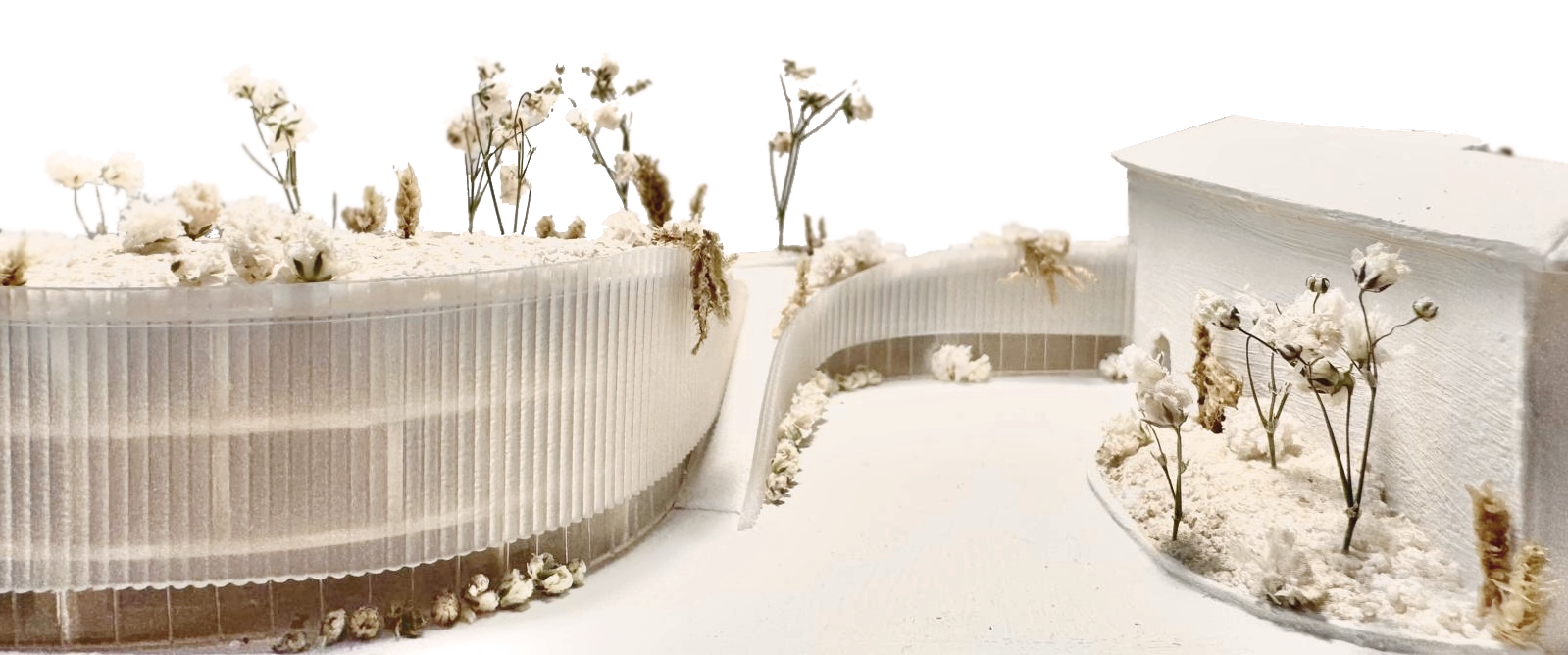
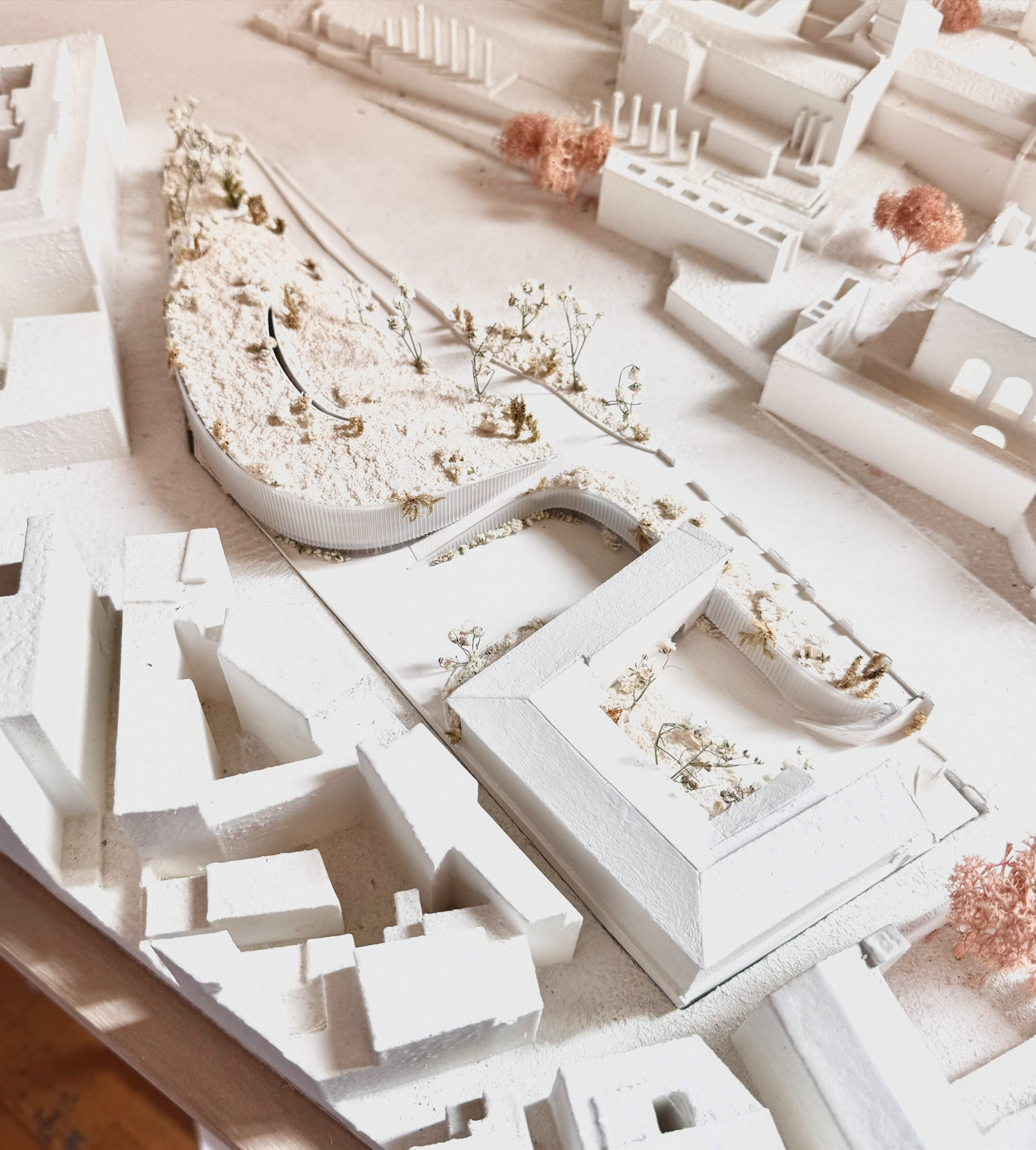
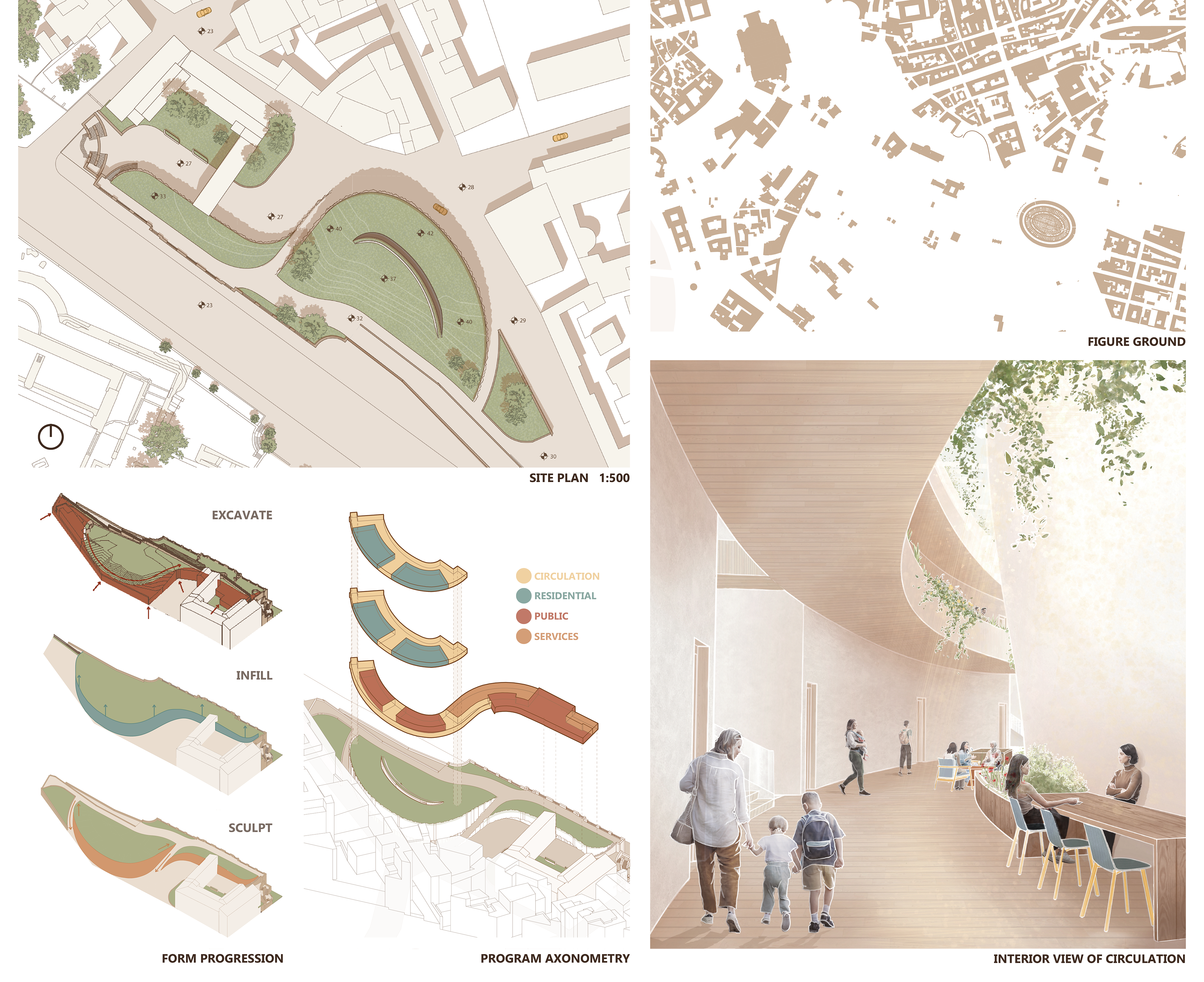
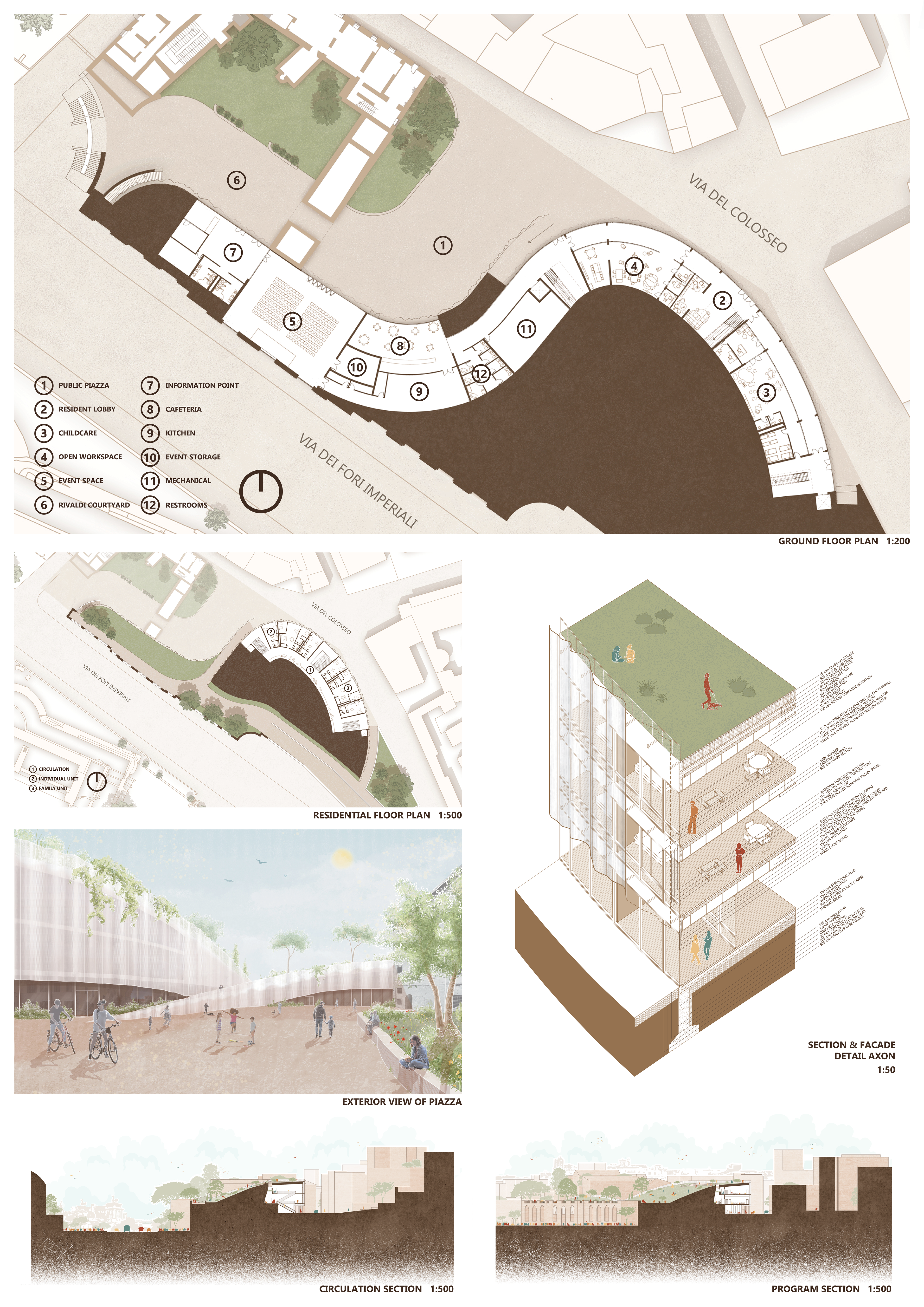
Formally, the building is embedded within the topography, allowing the architecture to remain partially concealed while opening toward the Monte neighborhood. The topography restores the historic layering of the Palazzo Rivaldi site, which was once a hillside. Above, it creates an active public space for movement, exploration, and community. In this way, the project reshapes the relationship between built form and public space, creating a layered, inhabitable condition that connects the public and private thresholds surrounding the site. Beneath the topography, housing is organized as a network of shared space and gathering. Resident amenities include a childcare facility, communal dining, flexible working areas, and collaboration spaces. The public program includes an event space for professional and career seminars, and an information point for tours of the historic Palazzo Rivaldi site. Programmatically, “Collina Viva” forms an environment that allows women to inhabit both professional and domestic roles without separation while inviting community engagement. The carved skylight and voids of the interior bring natural light into the section, establishing spatial continuity between levels, shared programs, and the landscape above.
Physical Models
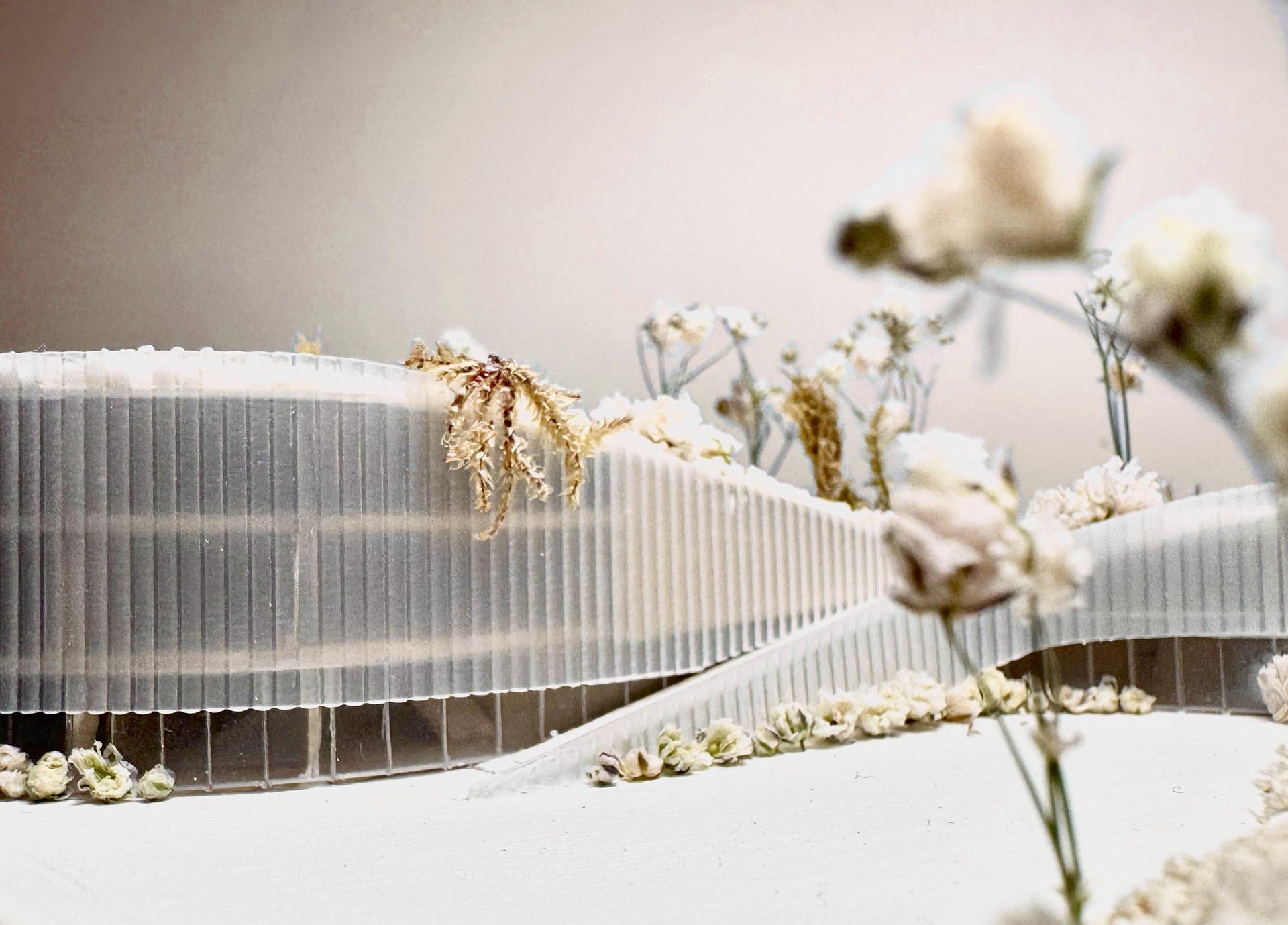
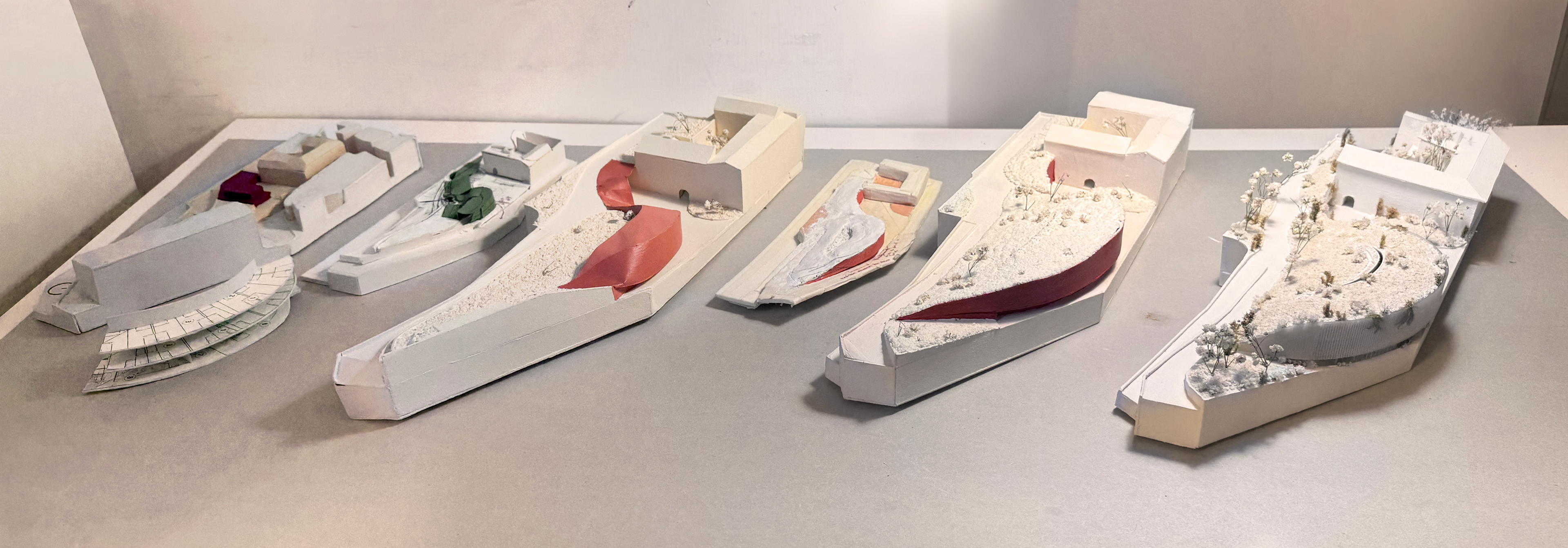
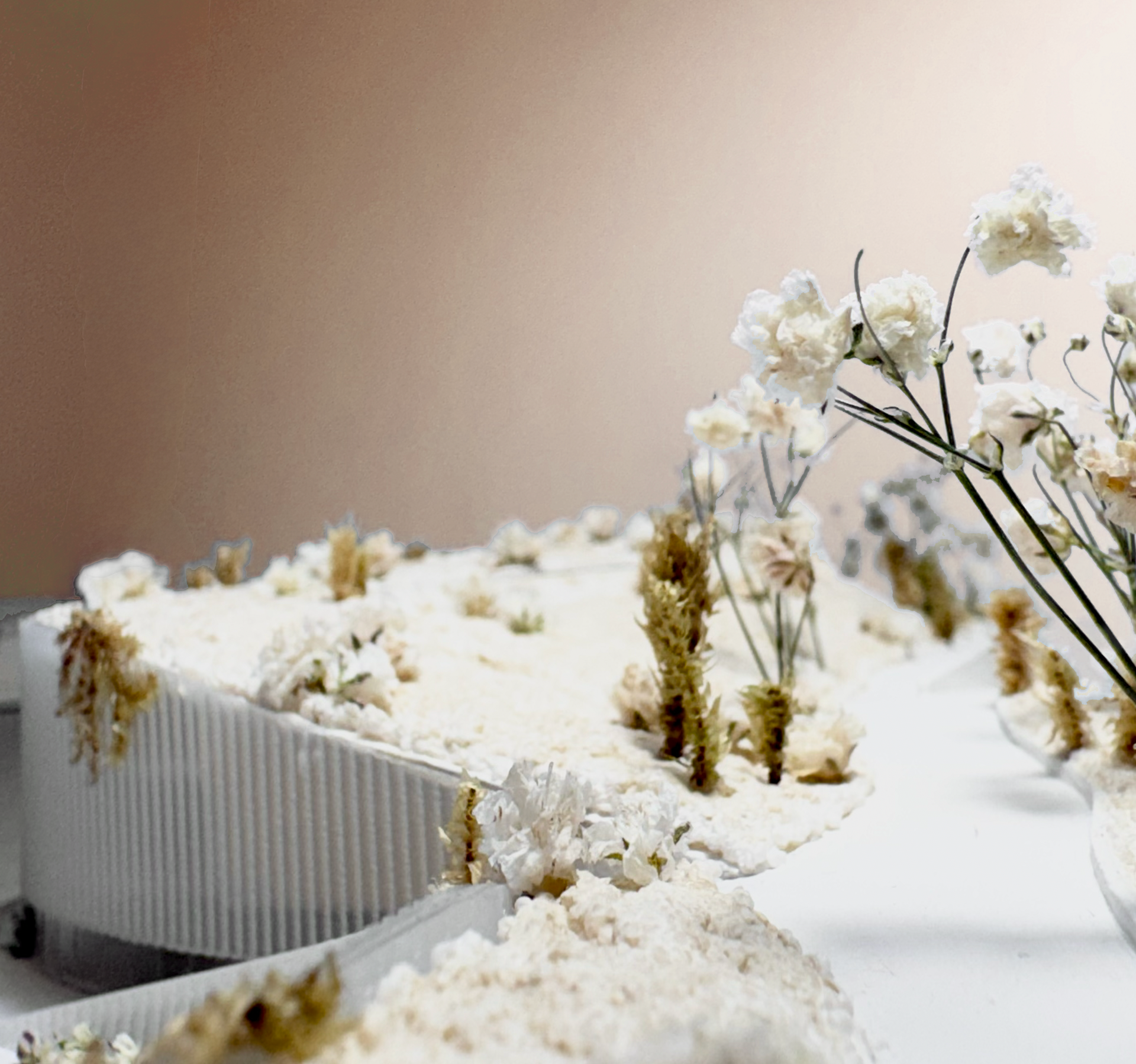
1:500 Scale Process and Final Models - Paper. Matboard, Acrylic